
AI Training Plans Versus the Human Coach: Navigating the Future of Endurance Sport
Artificial Intelligence is making waves in every industry, and endurance sport is no exception. As coaches and athletes, we’re now faced with a new question: what’s the real difference between a training plan built by AI and one delivered by a coach who uses AI as a tool? With so many platforms offering AI-generated plans, and some athletes even turning to tools like ChatGPT for their schedules, it’s important to understand how these options stack up against the support and expertise a human coach brings. This article is a summary of the recent podcast with Coaches Diogo and Philip.

Defining AI-Based Training Plans
It’s helpful to separate what we mean by a truly ‘smart’ AI plan from a fixed plan generated by a large language model.
If you ask a large language model (LLM) for a marathon or 70.3 training plan, you’ll usually get a fixed schedule, one that’s set in stone around your race date. In reality, this isn’t much different from what you’d find in a book or magazine, even if it feels a bit more personalised at first glance.
A genuinely smart AI plan is different. It adapts as you go, responding to your progress and feedback. Think of it like a satnav: a fixed plan just gives you the route from A to B, but a smart AI plan checks in along the way, did you hit your training zones, did you miss a session, how is your fitness changing? It updates your schedule in real time, making your training much more tailored and responsive to your needs.
The Coach’s Role in the Age of AI
For coaches, AI isn’t something to fear; it’s a fantastic opportunity to enhance what we do. Those who are willing to learn and embrace these new tools will be best placed to help their athletes thrive in today’s environment.
Want help individualising your training?
Our coaches help endurance athletes build training plans that fit around real life while still improving performance.
Book a Free Coaching ConsultationAI is a powerful tool that can accelerate analysis, planning, and data collection, giving coaches more time to focus on what matters most for athlete development. Think of AI as your assistant coach: it can crunch the numbers and suggest a plan in seconds, but it’s the human coach who makes the final call, using their experience and judgement to decide what’s best for the athlete in front of them.
The Value of the Human Connection
The real difference between an AI plan and working with a coach is the human connection and the judgment that comes with it. Most athletes don’t just want a plan; they want someone to talk to, someone who understands their journey and can help them make sense of their performance. Writing a plan is often the easy bit; it’s the support and conversation that make the real difference.
Key aspects a human coach provides that AI cannot:
Psychological and Emotional Support: A machine can adapt if an athlete fails a session, but it cannot understand the athlete’s mind or the psychological reasons behind the change. Coaches provide the necessary reassurance, address psychological challenges, and help athletes get used to difficult training ideas. For example, in a full-distance race, a brief video call with a coach was the factor that prevented an athlete from quitting.
Real-World Context and Judgement: A coach brings real-world experience, allowing them to influence training beyond pure metrics. They might adjust a plan to focus on technical skills or to account for lifestyle factors and commitments (such as scheduling coordination) that the AI system would miss. The coach can exercise judgment to determine what is right for the athlete, even if it is not the "perfect" plan according to the models.
A Different Perspective: The human coach provides a feedback loop, offering a different perspective to the athlete. They can assess the holistic picture, the psychology, lifestyle, and other variables, and advise on a decision that creates a plan to allow for all of those elements.
Coaching and AI in Tandem
The best results come when AI and coaching work hand in hand, each playing to their strengths. AI can fine-tune sessions in ways that even the most dedicated coach might struggle to do, such as instantly adjusting to a sudden change in weather. Used well, AI acts as an assistant coach, giving athletes immediate, personalised feedback while the coach brings the bigger picture together.
Coaching is at its best when it combines the precision of an optimised AI plan with the insight and adaptability of a coach. This isn’t just for elite athletes—everyone, from first-timers to professionals, benefits when a coach can focus on what matters most for them at each stage of their journey.
Practical Takeaways
AI is now part of the coaching landscape, and it’s here to stay. Here are some key points for athletes and coaches to consider:
Embrace the Tool: Rather than resisting change, coaches should learn how to use AI to support their athletes and help them reach their goals.
Use Data and Feel: Athletes should connect AI insights with their own sense of effort and training intensity. Combining data with how you feel is a powerful way to learn and keep progressing.
Focus on the Bigger Picture: Missing a session is not the end of the world. AI can help you adapt quickly, but a coach will help you understand why it happened and what to do next. The best training decisions always take the bigger picture into account.

Philip is the founder of Tri Training Harder LLP. He’s a British Triathlon Level 3 coach, and has been coaching for over a decade and is involved with mentoring and developing other coaches.
Philip has coached athletes to European and World AG wins, elite racing, many Kona qualifications, IRONMAN podiums and AG wins.
Alongside the conventional development through many CPD courses, he has also been fortunate enough to work alongside experts in the fields of Physiotherapy, Strength and Conditioning, Nutrition, Psychology, Biomechanics, Sports Medicine. Putting this knowledge into practice he has worked with thousands of athletes to various degrees, from training camps in Portugal and around Europe, clinics in the UK and online coaching.
Visit Philip's
Coach profile
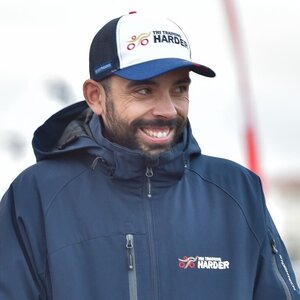
Triathlon Coaching started for Diogo in 2010 when he was invited by Sporting Lisbon to start coaching the Triathlon School. Realising that coaching with only the level 2 wasn’t enough, Diogo decided complete his degree in Physical Education and Sports. While at University, Diogo started to coach at some training camps in the South of Portugal and was soon an integrated part of the coaching team for the Junior Portuguese National Team at both events and camps.
After completing his degree, Diogo was invited to join the Portuguese Triathlon Federation as the Coaching Development Director, organising several Coaching Courses and CPD’s.
At the same time, Diogo has been joined several High Performance athletes through World and European Triathlon Cups and Championships. In 2017 he did his Level 3 coaching qualification in Madrid, Spain giving him an impressive insight to the world of high performance sport and how to find the extra edge.
The experience gained at many levels of triathlon gave him a very understanding on how the triathlon world works as well as how to get the very best out of all athletes, from beginner to the very top level elite athletes.
Visit Diogo's
Coach profile
We’re here to help
Tri Training Harder are one of the leading Triathlon coaching providers in the UK, using our wealth of experience to unite scientific and technological research with already well-established and successful best practices, to create a formula for triathlon and endurance coaching that works.
The result is an honest, dynamic, yet simple new way of constructing an athlete’s training to allow them to reach their potential.
If you’re planning your next season, just starting out in the sport or are looking for extra guidance at the very top end of the field, we are here to help, and our coaches would be delighted to hear from you. You can contact us via the website, and one of the team will be in touch.